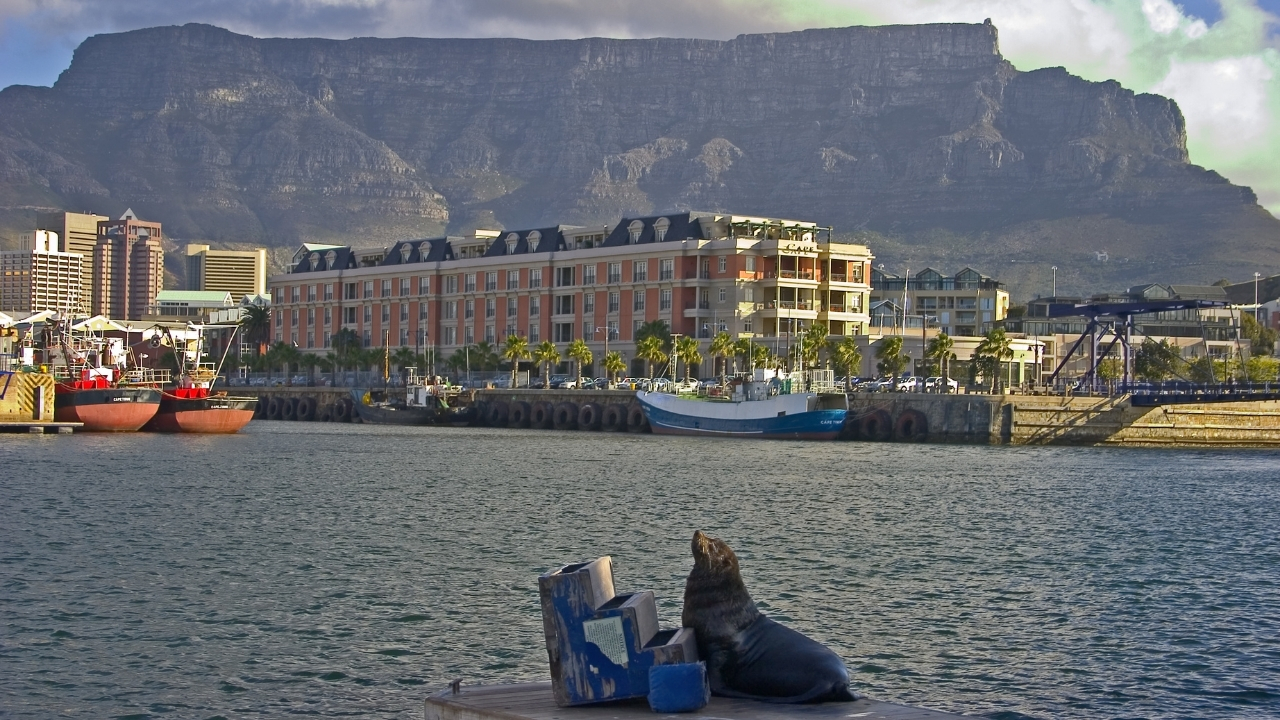
Cape Town has spent years near the top of ‘World’s Most Beautiful Cities’ lists, and — remarkably — it has earned every placement. But before you start pinning Table Mountain photos and bookmarking Clifton beach restaurants, there’s a practical side to visiting South Africa that rewards proper preparation. Visas (or the joyful lack thereof for many nationalities), health documents, currency, vaccinations, and the very specific art of packing for a city where it can be 30°C at noon and 16°C by sundown. This guide covers all of it honestly, without the tourist-board gloss. Consider it your briefing from someone who actually wants your trip to go well.
Visa Requirements for Cape Town / South Africa
The good news: South Africa is visa-free for an unusually long list of nationalities. Citizens of the following countries can enter South Africa without a visa for up to 30 days (leisure travel), extendable in some cases to 90 days:
- United Kingdom, Ireland, all EU member states
- United States of America, Canada
- Australia, New Zealand
- Japan, South Korea, Singapore
- Brazil, Argentina, Chile, Mexico
- Most Commonwealth and SADC nations
Citizens of countries not on the visa-exempt list — including India, China, Nigeria, and several others — will need to apply for a South African visitor’s visa through the nearest South African Embassy or High Commission. Processing times vary significantly; apply at least 6–8 weeks before travel. Do not leave this until three weeks before departure and expect things to go smoothly.
Important: South Africa requires that your passport have at least 30 days’ validity beyond your planned departure date, AND at least two consecutive blank visa pages. Many travellers have been turned away at check-in or immigration for violating the second rule. Check your passport now. Seriously.
The Yellow Fever Certificate: Don’t Get Caught Out
If you’re flying directly from the UK, US, Germany, Australia, or similar non-endemic countries, this requirement does not apply to you. If your itinerary includes a stopover in Nairobi, Addis Ababa, Lagos, Accra, or similar hubs — even for a few hours — carry the certificate regardless. South African immigration can and does turn people away at the border for missing documentation.
This one catches people out every year. If you are arriving in South Africa from — or have transited through — a country on the yellow fever endemic zone list, you must carry a valid International Certificate of Vaccination or Prophylaxis (the yellow card/e-vaccination document) for yellow fever. Countries on this list include most of sub-Saharan Africa, Brazil, Peru, Colombia, and others.
Health: Vaccinations and Medical Prep
Cape Town itself is a temperate, well-serviced modern city — the health preparation for Cape Town is much lighter than for a Kruger or Botswana safari, for example. Practical health checklist:
- Malaria: Cape Town is malaria-free. No prophylaxis needed for a Cape Town-only trip. If your itinerary includes Kruger, Limpopo, or KZN game reserves, that changes — consult a travel medicine clinic before departure.
- Vaccinations: Routine vaccinations (MMR, tetanus, hepatitis A, and hepatitis B) should be up to date for international travel. South Africa does not require proof of vaccination for entry from non-endemic countries.
- Travel medical insurance: South Africa’s public health system is not designed to serve medical tourists, and private hospitals — which are excellent — will require proof of medical coverage or a credit card deposit before treating you. Get comprehensive travel medical insurance that includes emergency evacuation cover. Do not skip this.
- Prescriptions: Bring sufficient supply of any chronic medication for the full duration of your trip, plus a buffer. South African pharmacies are well-stocked, but your specific brand may not be available.
Currency: Rands, Cards, and ATMs
South Africa’s currency, the Rand, exchange rate hovers around R16–R20 to the US dollar, R19–R23 to the British pound, and R18–R21 to the Euro — figures that change daily, so check a live rate before you travel. The practical implication is that South Africa offers genuinely excellent value for visitors from stronger-currency countries: a very good restaurant meal in Cape Town that might cost £80 in London will run R400–R800 here.
- Cards: Visa and Mastercard are accepted virtually everywhere in Cape Town. American Express has wider acceptance than in many African destinations, but it is not universal. Tap-to-pay (contactless) works at most major retailers and restaurants.
- ATMs: Absa, FNB, Standard Bank, Nedbank, and Capitec ATMs are widely available. International bank fees apply — check your home bank’s charges. Withdraw in larger amounts to minimise per-transaction fees. Do not use ATMs in isolated or poorly-lit locations.
- Cash: Carry some rand for car guards, markets, and tipping. R200–R500 in your pocket at any time is sensible. Most things can be done card-only, but cash remains important for smaller transactions.
- Tipping: South Africa has a strong tipping culture. Restaurant tip: 10–15% of the bill (more for exceptional service). Guided tours: R100–R200 per person per day. Car guards (who watch your car in parking areas): R5–R10 per guard.
Getting to Cape Town: Flights and Arrival
Cape Town International Airport (CPT) receives direct international flights from:
- London Heathrow and Gatwick: British Airways and Virgin Atlantic operate direct routes. Flight time is approximately 11 hours.
- Amsterdam: KLM direct. One of the most-used European hubs for South Africa connections.
- Frankfurt: Lufthansa.
- Dubai and Doha: Emirates and Qatar Airways connect Cape Town to virtually the entire world through their respective hubs, with excellent business class options.
- Johannesburg (OR Tambo): If flying a carrier that routes through Johannesburg, check whether your luggage is checked through to Cape Town — most international carriers with domestic connections in SA will do this automatically.
From Cape Town International Airport, the city centre is approximately 20 kilometres — 25–45 minutes by car, depending on traffic. The MyCiTi bus (Route A01) operates a dedicated airport service to the City Bowl for R90–R100. Uber and Bolt are available, and typically cost R250–R380 to the City Bowl or V&A Waterfront. Avoid unmarked taxis at the arrivals exit — use the designated rideshare pickup zone or a pre-arranged hotel transfer.
Getting Around Cape Town
Cape Town requires a plan for getting around. Here’s the honest breakdown:
- Hire car: The most flexible option for exploring the Peninsula, Chapman’s Peak, and the Winelands. South Africa drives on the left. International visitors need their own country’s driver’s licence (English or with an official translation) plus an International Driving Permit for stays over 30 days. Major car hire companies are at the airport and in the city.
- Uber and Bolt: Cape Town has excellent rideshare coverage. This is the default for in-city travel, particularly at night. Download and set up your account before you land.
- MyCiTi bus: The city’s BRT network covers the airport, City Bowl, Sea Point, and Camps Bay reliably. Requires a myconnect card (available at the airport and Waterfront). R20–R50 per trip.
- Walking: The Atlantic Seaboard, V&A Waterfront, De Waterkant, and the City Bowl have walkable stretches. Exercise standard urban awareness, particularly after dark and in unfamiliar areas.
What to Pack for Cape Town
Cape Town’s Mediterranean climate means warm, dry summers and cool, wet winters — but the wind is the variable nobody warns visitors about adequately. The southeasterly ‘Cape Doctor’ can make a 28°C day feel like 18°C on the mountain or the beachfront, and it can appear without warning.
- Summer (November–March): Light clothing, windbreaker or light jacket, swimwear, SPF50+ sunscreen (UV levels are high at this latitude), comfortable walking shoes, smart-casual for dinner.
- Winter (June–August): Proper winter jacket, layers, waterproof outer layer, boots or closed shoes. The Cape Doctor is a cold westerly in winter. You will need real warm clothing.
- Year-round: Power adaptor for South Africa’s Type N 3-round-pin plug (also compatible with Type C and M adaptors — most modern South African sockets take the round 3-pin). South Africa runs on 230V/50Hz.
Cape Town Safety: The Honest Briefing
Cape Town requires the same calibrated awareness as any major city with significant inequality — and South Africa has significant inequality. Most visitors have excellent, incident-free trips. A small number do not. The difference is usually preparation.
- Stick to established tourist areas after dark: Atlantic Seaboard, V&A Waterfront, De Waterkant, Camps Bay strip, and Bree Street are all active and relatively safe late into the evening.
- Use rideshares, not street-hailed taxis: Uber and Bolt are the standard, trusted default.
- Don’t display valuables: Phones on café tables, camera bags left in sight in cars, and jewellery in certain areas are targets.
- Hiking safety: Table Mountain muggings do occur on isolated trails. Hike with others and stick to popular, busy routes — Platteklip Gorge is fine; remote circuits without company require more caution.
- Emergency numbers: South African Police Service (SAPS): 10111. Medical emergency/ambulance: 10177 (landline) or 112 (mobile). Private ambulance: Netcare 911 (082 911), ER24 (084 124).
Frequently Asked Questions
Do I need a visa to visit Cape Town from the UK?
UK citizens do not need a visa to visit South Africa for leisure travel for up to 30 days. Your valid UK passport with at least 30 days’ validity beyond your departure date and two blank consecutive pages is all you need.
Is Cape Town safe for tourists?
Cape Town is safe for tourists who exercise sensible urban awareness. The established tourist areas — Atlantic Seaboard, V&A Waterfront, the Winelands — are well-policed and generally incident-free. Exercise the same caution you would in any large city: be aware after dark, use rideshares, and don’t display expensive equipment unnecessarily.
What currency should I bring to Cape Town?
The South African Rand (ZAR) is the only currency you’ll use in Cape Town. US Dollars, Euros, and British Pounds can be exchanged at the airport, major banks, and Forex bureaux. Alternatively, withdraw Rands from any ATM — this typically gives a competitive interbank rate minus your bank’s foreign withdrawal fee.
Do I need vaccinations to visit Cape Town?
No mandatory vaccinations are required for entry to South Africa from non-endemic countries. Routine vaccinations (tetanus, hepatitis A/B) should be up to date. If your itinerary includes game reserves in Limpopo or KZN, consult a travel medicine clinic about malaria prophylaxis. Cape Town itself is malaria-free.
What plug adaptor do I need for South Africa?
South Africa uses Type N 3-round-pin plugs (240V, 50Hz). Most modern South African sockets also accept the European Type C 2-round-pin plug in a pinch. Bring a universal travel adaptor to cover all scenarios. Power banks are useful given the country’s load-shedding situation.
Cape Town is one of those cities that changes your baseline for what a city trip can look like. Arrive prepared, stay aware, and let the mountain do the rest of the work.